An in-school program for grades 3–12
Twenty structured sessions that take students from their first idea to a final pitch, run inside the school without adding to the teaching load.
What students learn
Class of 2026
The five stages
Modules, instructors, and assessment are ready. All you provide is a slot in the academic calendar.
Enrolment open for the next cohortWe map your grade levels, student numbers, and the schedule available at your school.
You receive a full 20-session plan with its modules and assessment format.
Students spot opportunities around them and learn to treat problems as starting points.
User interviews, needs mapping, and sharpening the core question.
From sketch to simple prototype, tested with prospective users, then refined.
A presentation to mentors and the school, closing with certification and portfolio.
Grades 3–5 · Foundation
Recognising the needs of people nearby and turning them into simple ideas.
First concepts of money: saving, trading, and setting a sensible price.
Basic digital tools for putting together a story and a simple presentation.
An idea poster and a group presentation in front of the class.
Grades 6–8 · Eksplorasi
Drafting a simple business model and testing its assumptions with real users.
Calculating capital, cost, and margin for a small venture idea.
Design tools and generative AI to speed up prototyping.
A prototype tested with at least ten prospective users.
Grades 9–12 · Eksekusi
Small market tests and reading the results to improve the product.
Financial projections that hold up in front of a panel.
Building and publishing a simple digital product.
A portfolio for university admission or internships.
Every subject has clear outcomes that can be assessed.
Learning outcomes
Learning outcomes
From public to private schools, in major cities and smaller regions alike.
Partner schools
Why these skills matter more each year, and why school is the best place to start.
Tools they master
Showcase from a previous cohort
Program summary
Every student completes a portfolio of their working process — not only the final result, but the versions that failed and what they learned from them.
Mentorss leave written feedback, and the school receives a capability map for each student at the end of the program.
Closing the program
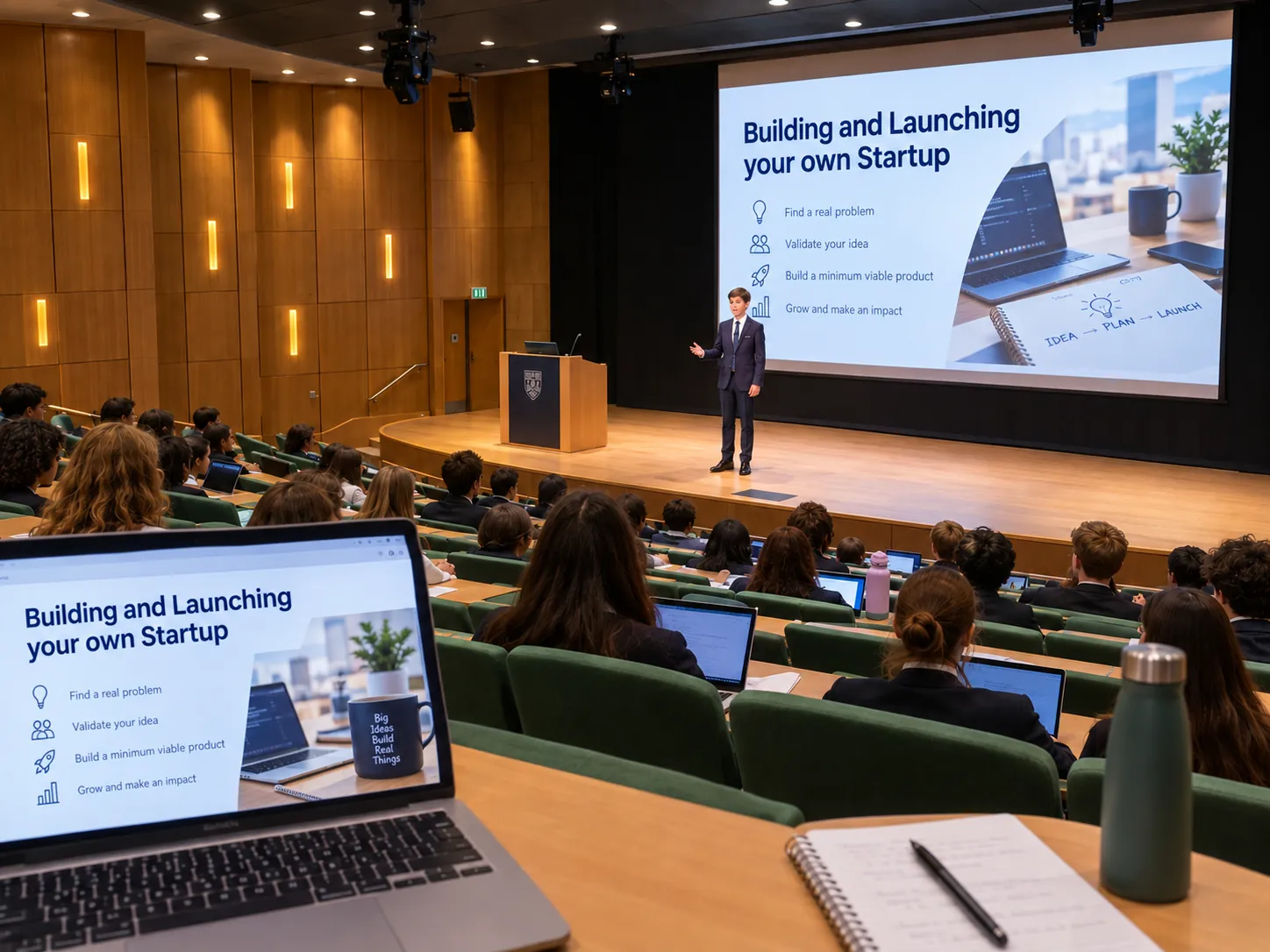
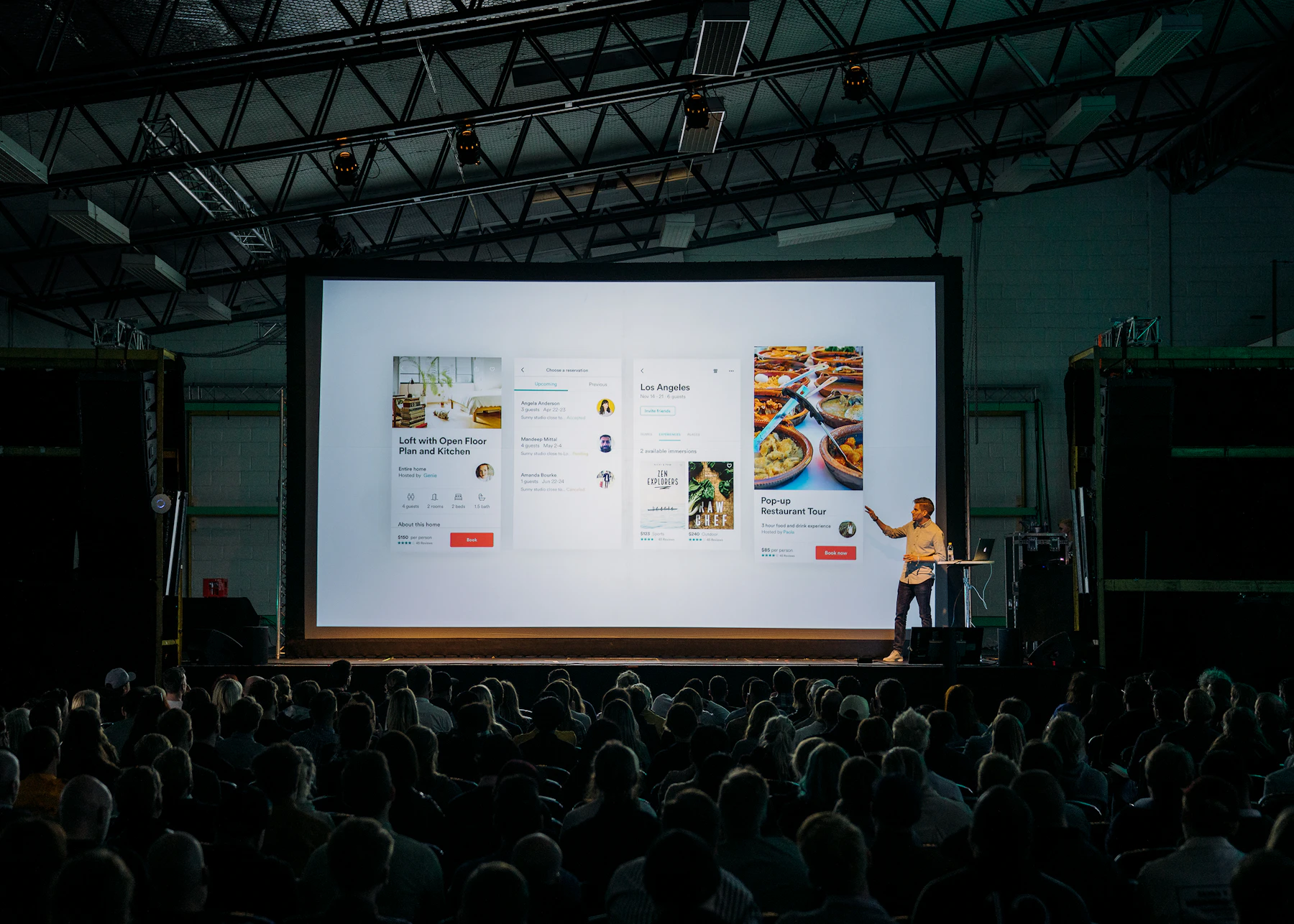
Students present a tested idea to mentors, teachers, and parents — including what worked and what failed along the way.
Open presentation
Attended by the school and parents.
Mentors feedback
Written notes for every team.
What students take home
A complete process portfolio
A program completion certificate
Written feedback from mentors
An individual capability map
Tell us your grade levels and student numbers.
We will send back a draft schedule and its modules.
Office
Jakarta, Indonesia
hello@example.com